A SCALABLE DIGITAL GAME PLATFORM
One creative lead, and one lead developer create a trivia game platform and database with automated curation layers. The result is a self-growing, digital party game engine with application across mobile, video, and immersive experiences – truly hard to replicate IP.
Settling on interface elements before it looks pretty saves design and engineering cycles.
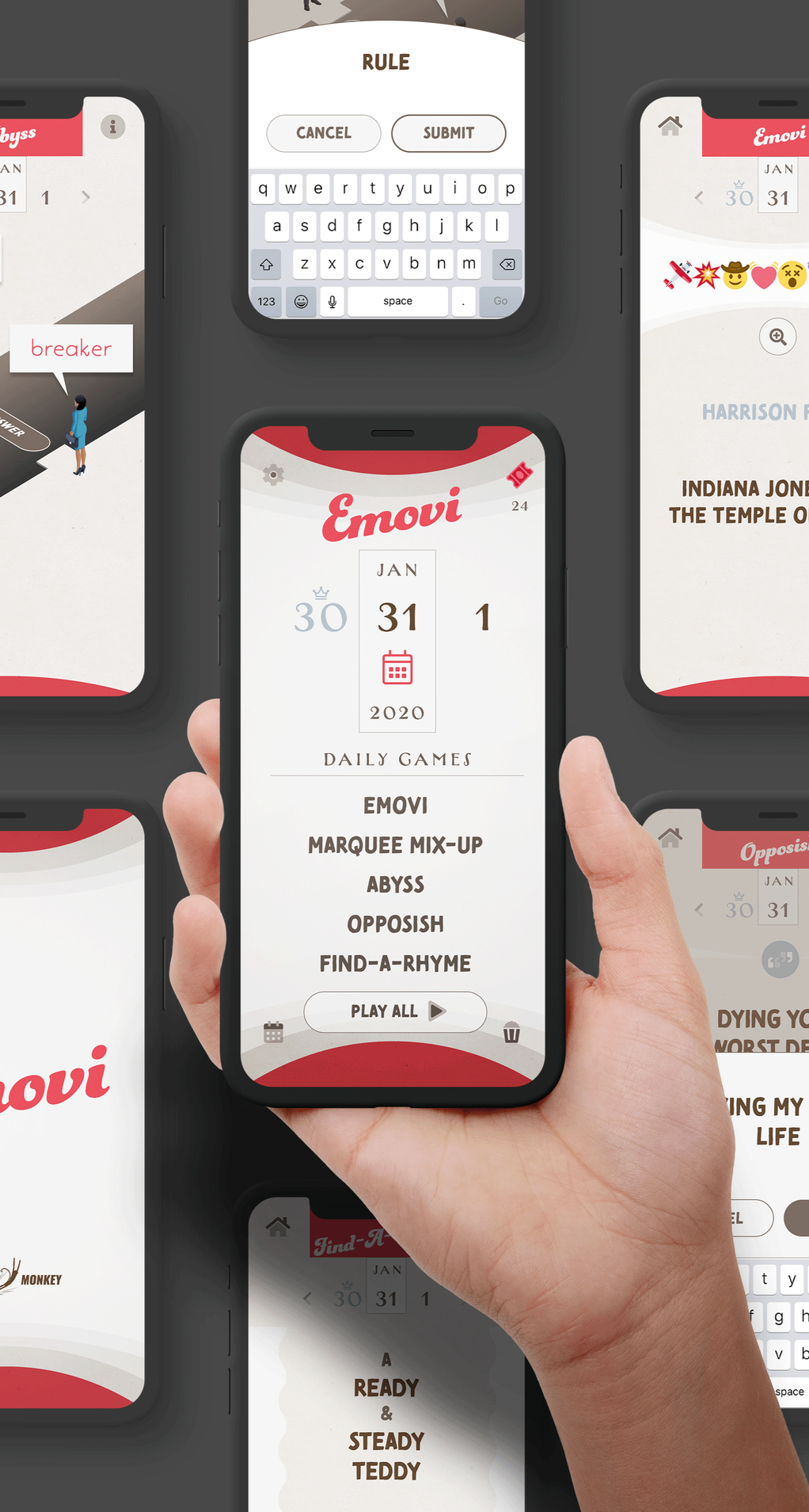
Light and playful SVG graphics really befit the theme and feel of the Fonks
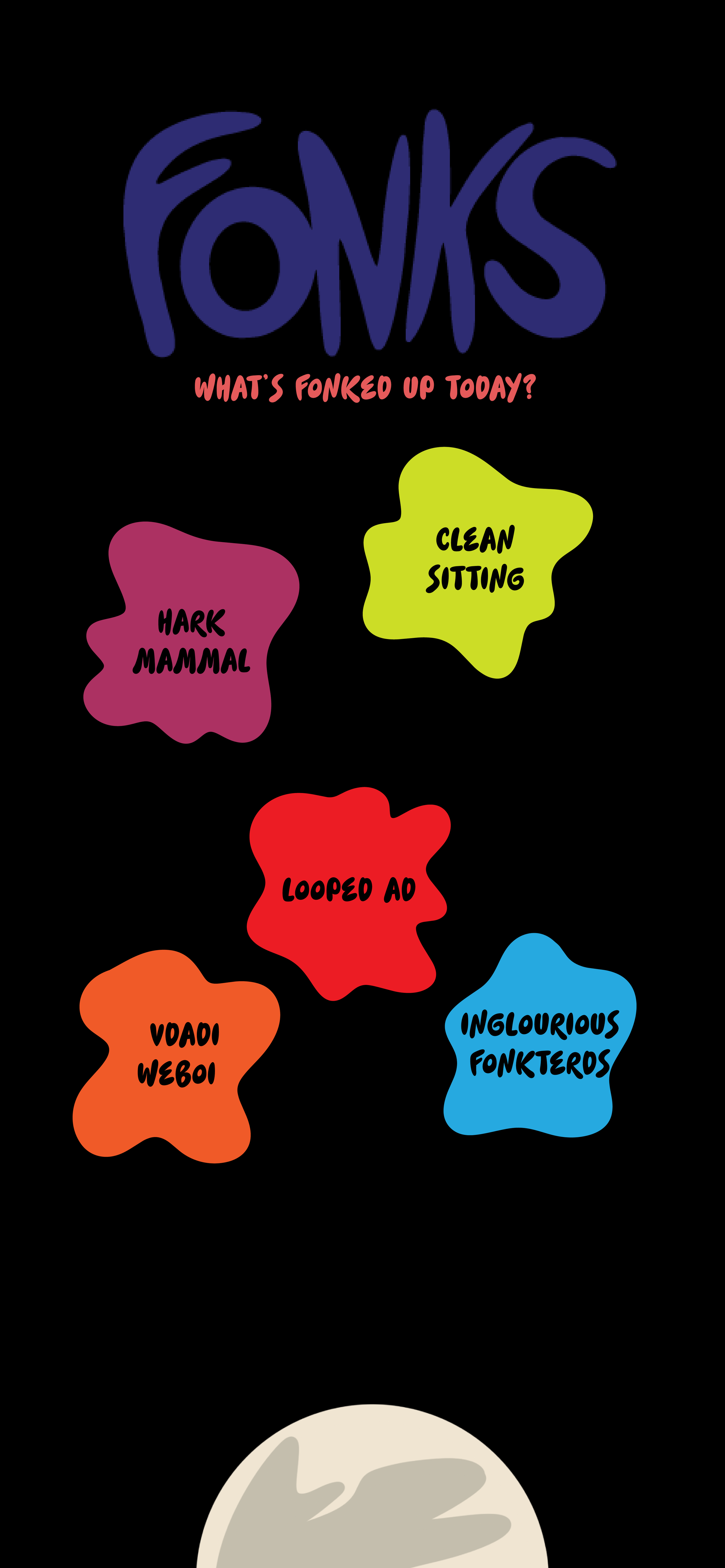
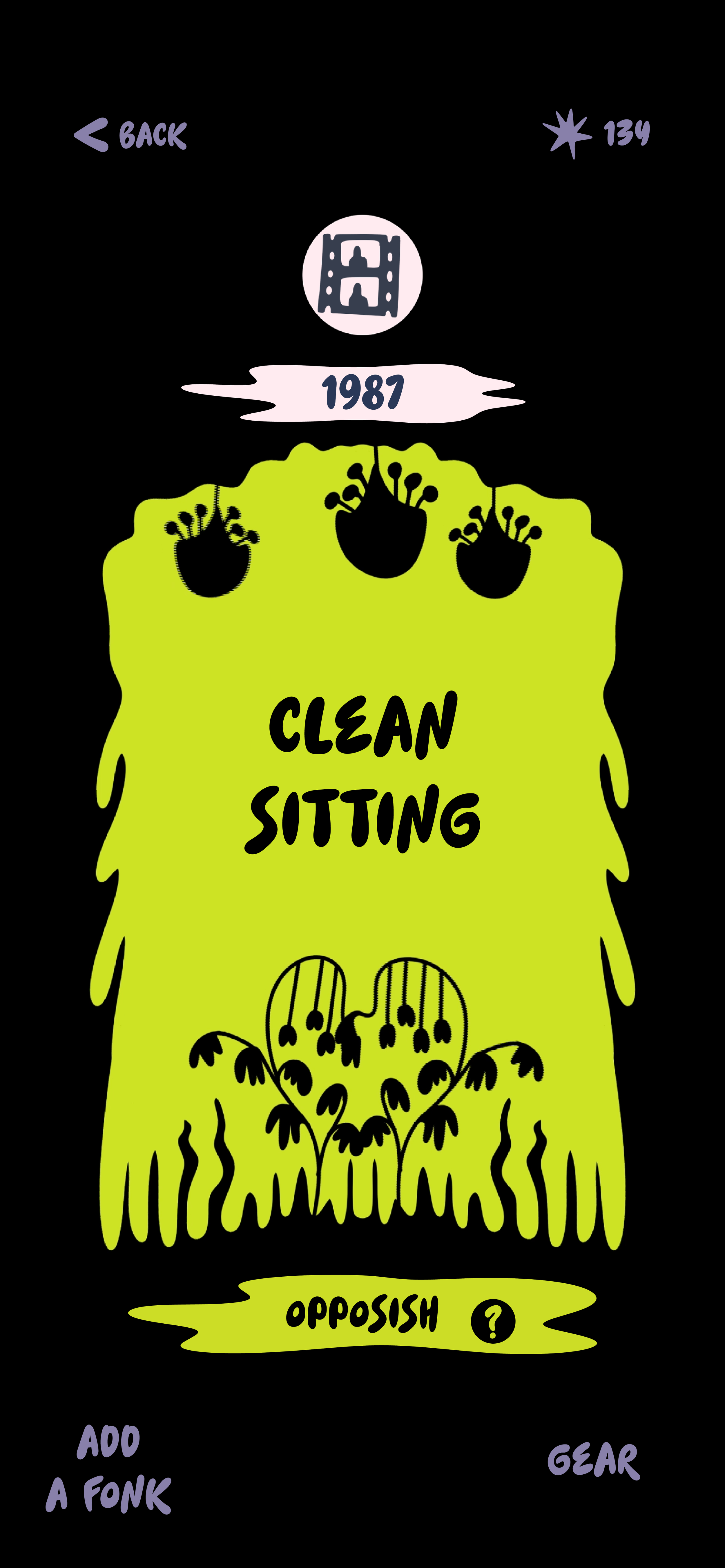
Knowing where the design was headed was crucial to not over-designing the look and feel too early. Indeed, it eventually changed from the original ideas.
Plan for Design, Design for Play.
Taking An Ugly-First Approach
I saw an opportunity to unite two properties, strengthening each: a set of pun-style wordplay games, and the colorful, celestial lore of the Fonks. Merging the two, however, needed care, and as is so often the case, demanded that I let go of aesthetics and focus on the experience.
I had first envisioned the games as a daily, digital replacement for the disappearing comics and games section of the newspaper. Wordle and NYT came along and filled the gap quite well, but these games still have a different, zanier experience worth giving the world, and the space is ready for healthy competition.
Fonks, meanwhile, needed a vehicle for their “fonking up the world” story line. What better way than to fonk up familiar pop culture tidbits that we could all fix from the comfort of the couch? The puzzles would shine in a whimsical, colorful, celestial aesthetic.
Knowing the visual direction helped keep the star on the horizon, while I focused on the data foundation that would drive the scalable game platform.
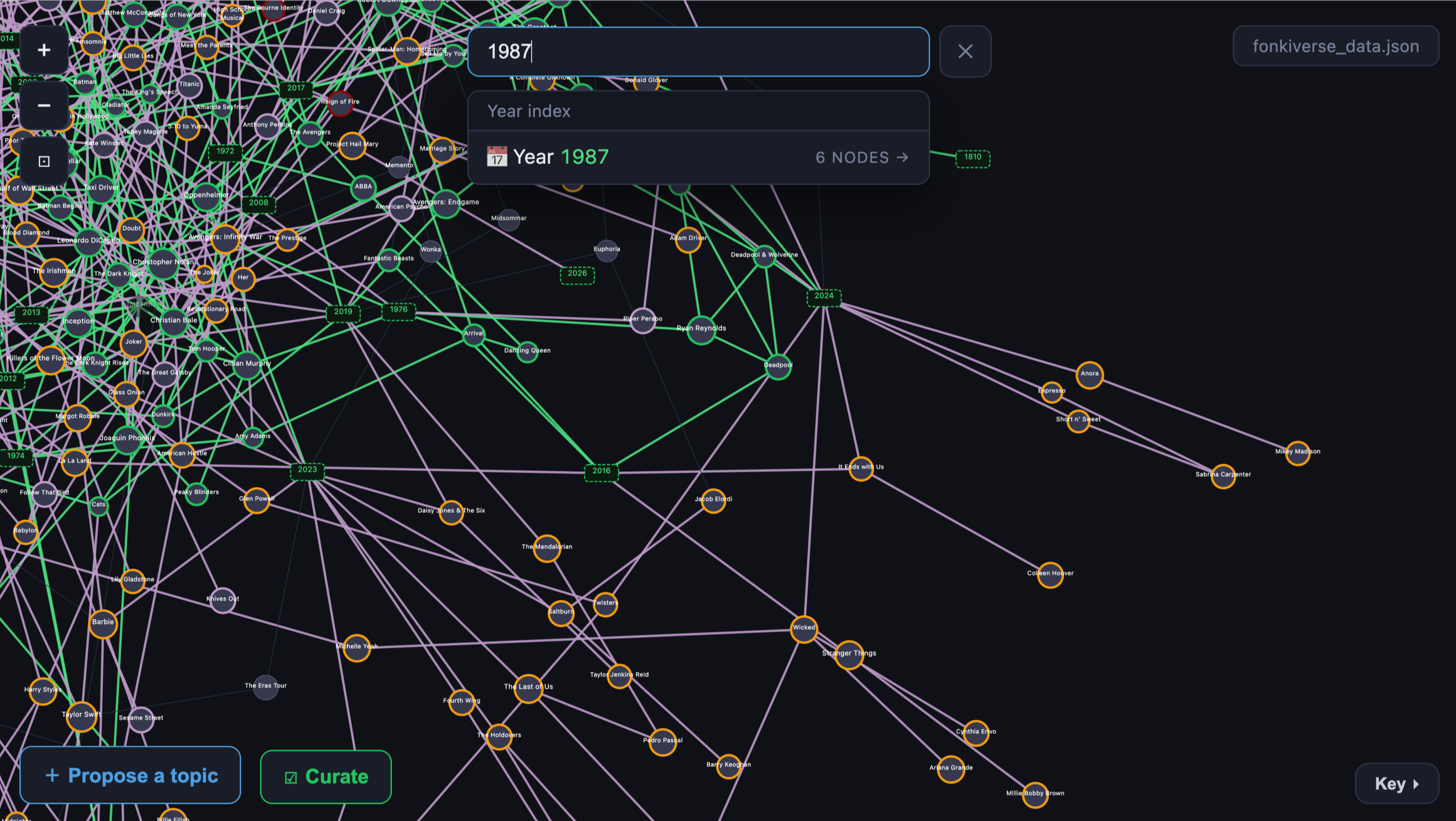
Daily Puzzles At Scale: The Fonkiverse DB
Sure, visual design is nice, but sometimes you need a massive graph database of wordplay puzzles just to get started.
So I created one, and then kept iterating based on the needs of the gameplay in multiple formats.
Imagining the connections from one puzzle to the next led to words like “fonktrails” and “unfonking” as the two worlds merged.
Concepts like puzzle difficulty, currency, and power-ups would emerge, fade, and swirl to create and solve door problems in a stormy brew of game design. Meanwhile, I envisioned game show, pub trivia, and passive vertical short versions of the game in addition to the mobile format, with the intent the database could accommodate all of them if I designed it properly.
I created a python module that would walk the graph and carve puzzle sets. Fonktrails had flavors and styles that befit the play format, with some needing to be all the same puzzle type, while others would hop from easy to difficult over the course of a trail. So the module has to be nimble and know what it’s looking for.
Human curation is necessary for wordplay puzzles. How could savvy interfaces give the curator access and control over puzzle content? I kept iterating.
Automation, Then Curation
Stress-Testing an AI-Assisted Wordplay Puzzle Graph Database
Trivia is intrinsically a curated game with consumable, one-time-play puzzles. This is in contrast to platformer and casual match games. Automated curation of generated content is no small feat – but is it now possible with Anthrop\c? Let’s find out.
In order to design interfaces, you need to know what you want and why.
AI is not the creative resource – it enables the creative resources to move forward more quickly. Delineating roles, defining stories, aligning goals, and creative control – these are what the human stakeholders bring to the table. Such was the case here: What is the game being played? Is it fun? Where is it not fun? The emotional and behavioral aspects of even the simplest game are not the wheelhouse of an LLM. Human beings still need to guide these aspects.
A ket aspect of this game is humor – another weakness of AI.
Its early generated puzzles lacked the proper timing and nuances of wordplay humor. This game blends trivia and various modes of wordplay – a rather simple humor device that the AI still struggles with. But there are reasons things work or don’t and all we needed to do was find those reasons, and communicate them as rules.
Knowing I wanted to end up at largely automated puzzle curation for scalability, I assured there were human-attended gates in early stages, so that we could see what would lead to quality, automated curation of these humorous puzzles, tweaking the generative layer for maximum humor, and creating curation bots to recognize the rules of the road.
Once those rules were established, one puzzle type after another, that automated curation can take place.
Only then can we trust the bot to take over the job.
This means a creative human needs to be able to effectively communicate the mechanical rules behind the function of the product – and that will always be true.
A human curation layer helps us see and define what automated curation would need to be effective.
Testing the database against game design with a rudimentary spun-up mobile interface
Reviewing the generative design and packaging it up for handoff.